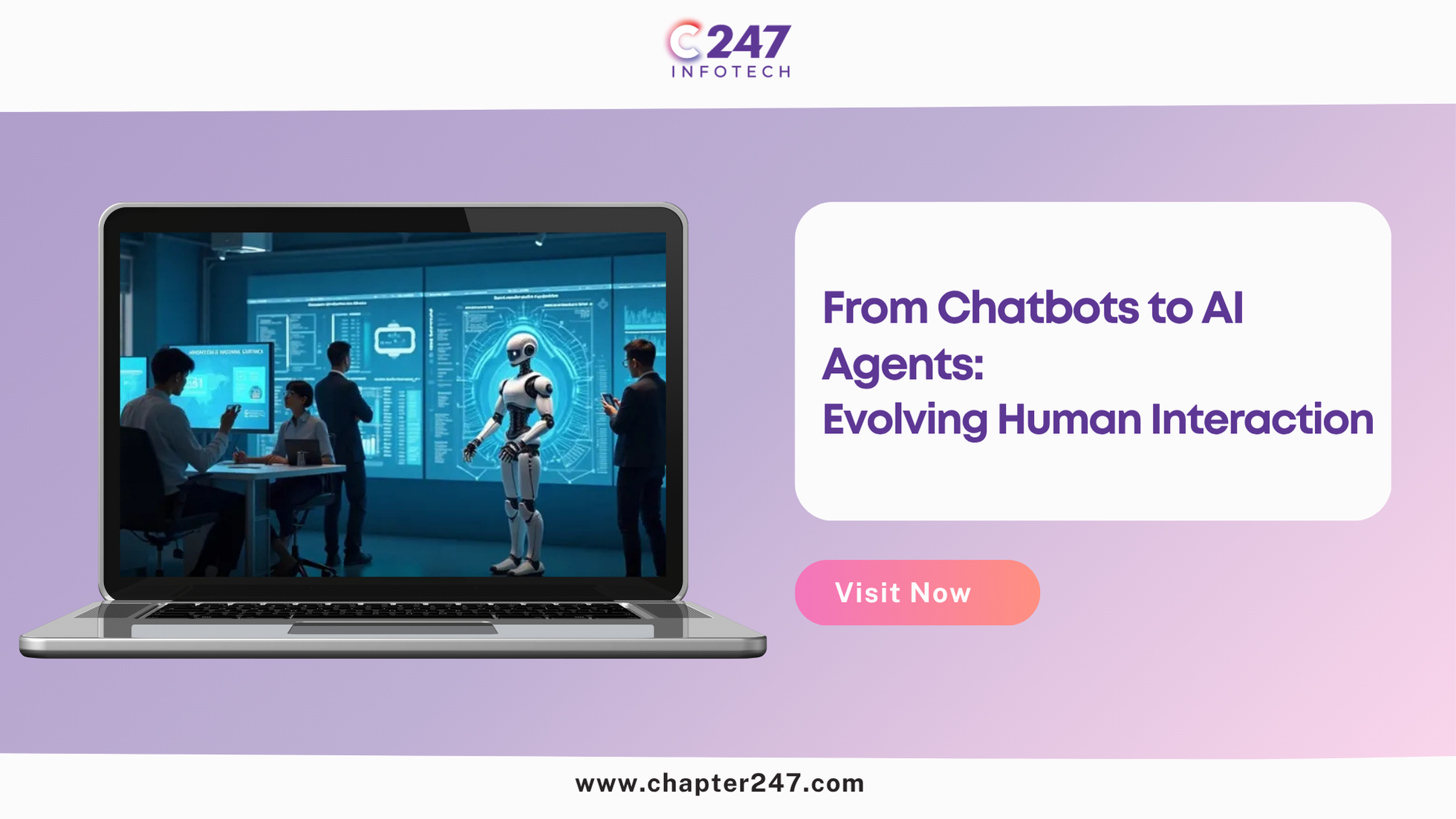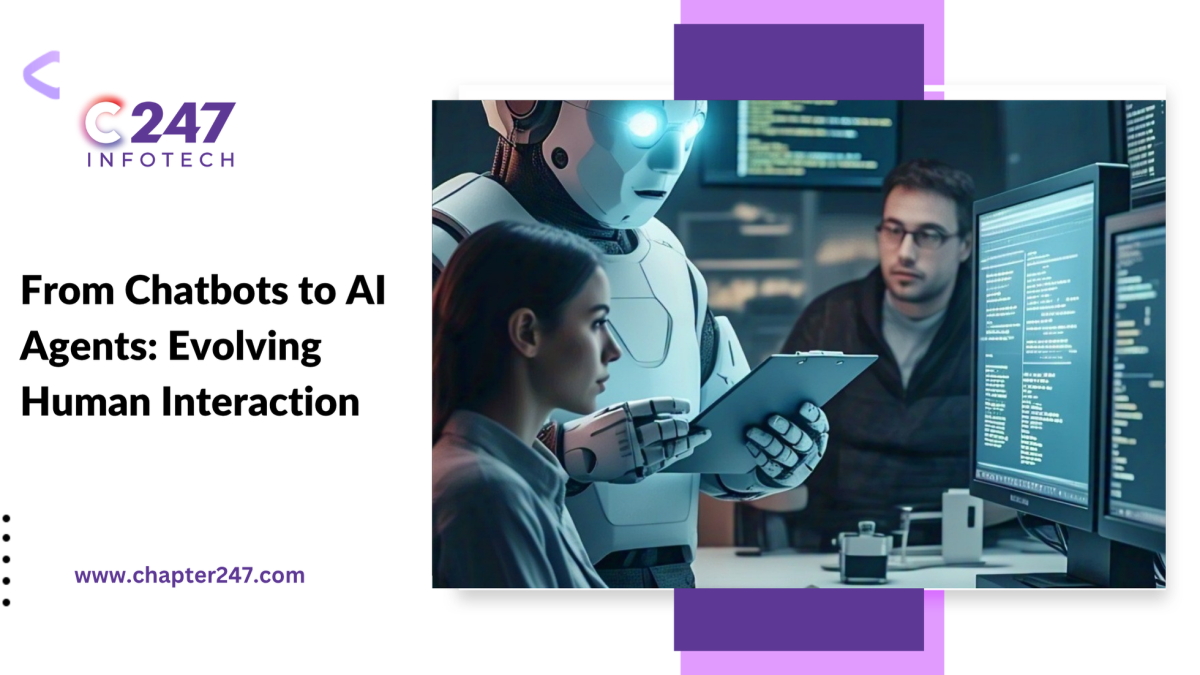
Human-machine interaction is being dramatically transformed. In 2025, the global chatbot industry is expected to be worth $15.57 billion. What once started with the chatbots that followed the rules to converse with people has already entered another chapter led by independent AI agencies, digital partners free of the rules with sophisticated reasoning capabilities, the ability to learn about the contexts of the conversation, and make decisions independently.
The current change is not merely redefining the way businesses interact with customers and employees, but it is also preconditioning the world where machines will become equal participants in the problem-solving and innovation process.
Scripted Conversation to Smart Collaboration
Automatic communication has long relied on chatbots. They are programmed to communicate either by means of text or voice, and they are best suited to perform simple, monotonous functions, including responding to FAQs, walking users through straightforward procedures, or making transactions. They are highly reliant on pre-programmed scripts and matching of keywords, so they are efficient at performing routine queries but have little flexibility in ambiguity or multiple-step requests to be able to retain queries.
AI agents, on the other hand, introduce a major step in advancement. Once fully developed, these systems will use complicated algorithms, natural language processing (NLP), and real-time contextual analysis, and then automatically analyze user intent, divide complex tasks, and subsequently perform any action it is able to on any platform.
Artificial intelligence agents can recollect past experiences, learn new things, and even recognise emotional cues, unlike chatbots, which makes them capable of handling complex, multifaceted issues without human direction at all times.
The Emergence of Auto-Agents
Task accomplishment is their thing, but they do not merely accomplish the tasks assigned but they determine which tasks to pursue and how to prioritize and modify the doing strategies as the conditions in the environment change. The developments in the area of machine learning, reinforcement learning, and strong decision-making modalities drive this autonomy.
The global AI agent market is estimated by the industry to grow at a compound annual growth rate (CAGR) of more than 35% between 2024 and 2030, which can be attributed to the demand for intelligent automation in other industries such as finance, healthcare, and customer service. Companies that are using the help of AI agents have already reported a decrease in operating costs up to 40% and an increase in customer satisfaction ratings by 60% due to this faster response and personal contact.
Key Differences Between Chatbots and AI Agents
While chatbots follow set rules, AI agents learn, adapt, and collaborate for smarter, more dynamic interactions.
| Aspect | Chatbots | AI Agents |
| Decision-Making | Operate on fixed rules | Make decisions autonomously using real-time context |
| Context Awareness | Relies on keyword triggers | Understands deep context and handles ongoing dialogue |
| Task Handling | Best for basic, repetitive tasks | Manages complex, multi-step operations across systems |
| Learning Capability | Needs manual reprogramming | Continuously learns and improves on its own |
| System Integration | Typically limited to one platform | Connects with various systems in dynamic settings |
AI agents don’t just improve upon chatbots. They transform the way automation works. Instead of just responding, they think, learn, and collaborate with users in real time.
Real Life Effects and Prospects in the Future
AI Agent, with their growing capabilities, has a huge practical application:
- The AI agent in a customer support use case would be able to solve multi-stage, complex problems that would be very cumbersome for standard chatbots.
- They automate cross-departmental operations in enterprise workflows and enable employees to become more productive by performing higher-value work.
- At the personal productivity level, the AI agents could be used to schedule events, make travel arrangements, and negotiate on behalf of the users.
AI technology is still advancing, so you can look forward to its further penetration into the real world with the help of AI agents. We can expect the hybrid use of chatbots that will take care of more straightforward things, whereas AI agents will address more complex and dynamic requirements in the next decade.
Conclusion
The development of AI agents demonstrates the level of progress that artificial intelligence has gained and its ability to shake up industries. AI agents are leading the tech revolution, having made it easier to interact with customers and to achieve breakthrough innovations such as autonomous systems. The adoption of these smart systems will lead to efficiency, a new age, and growth in the future.
To know more about AI Agents and their usage, partner with Chapter247, and get ready to make use of this industry-disruptive technology in your future undertakings!