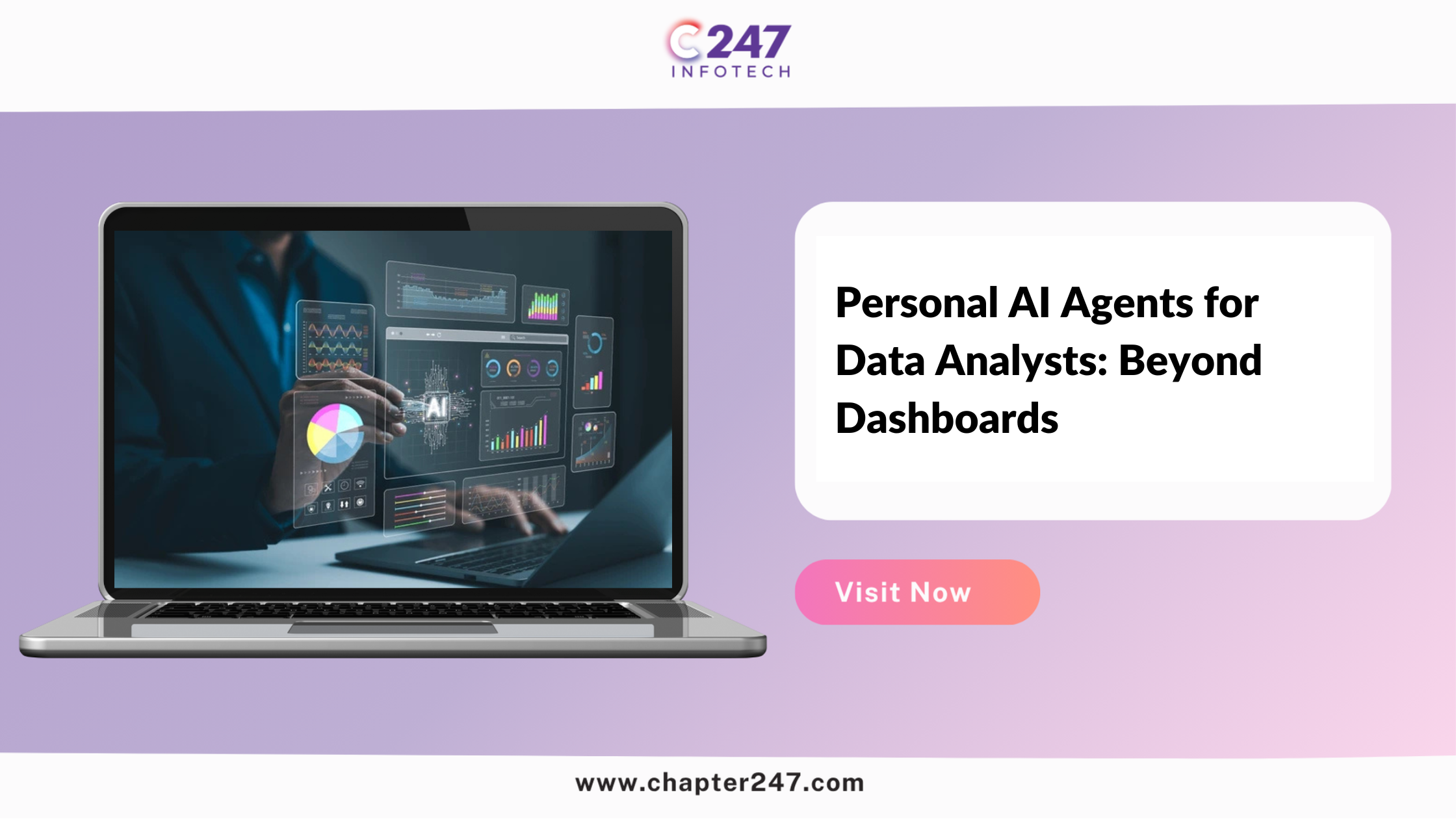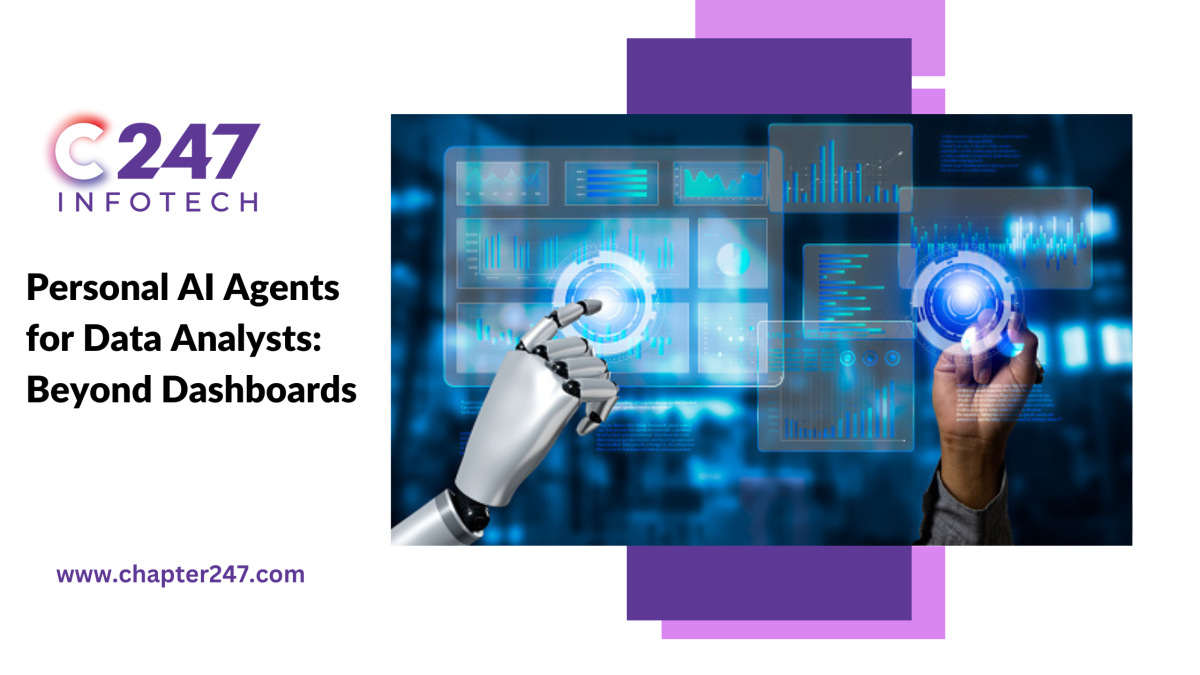
Nowadays, information is the lifeblood of modern business. Each purchase, each campaign, and each click creates some valuable information. This data has been primarily tracked by the company using dashboards over the years. However, although dashboards are convenient, in many cases, they need trained analysts to interpret the information. Most individuals look at rows of charts and numbers and cannot find significance.
Personal AI agents come in at this point. They do much more than dashboards do by converting raw numbers into meaningful insights and actionable narratives. According to Exploding Topics, 48% of firms employ AI in some capacity to make good use of big data. Rather than requiring people to search through dense and multi-layered data, these AI-based assistants do it on their behalf. They describe trends, point out issues, and even recommend future action. They can put it as being a smart partner and make data easy to access and manipulate.
Limitations of Traditional Dashboards
Dashboards provide a fixed perspective of business performance with fixed charts. Dashboards require manual search by analysts to find a specific response or trend. This would be a time-consuming manual exploration that would delay the discovery of valuable business patterns. Dashboards seldom issue any warnings when something is out of the ordinary. Instead of proposing changes, they wait till the users can notice them. This limits the effectiveness of data analysis and the pace at which decisions are made.
What Are Personal AI Agents?
Personal AI agents are smart helpers that are geared towards data work. They are used to allow analysts to pose questions in natural language, such as talking normally. Analysts are able to type questions and receive answers instead of clicking charts. These agents are also capable of offering proactive insights without being directed to do so. They get context sensitive and get to know tastes and realize what is going on. They are intended to conserve time and make analysis more available.
How They Help Data Analysts
AI agents enable the ability to access company data quickly and in a chatty manner whenever there is a need to do so. Rather than tinkering with dashboards, analysts simply pose questions and get immediate answers. Anomalies are also identified automatically and offer suggestions of possible causes to the agents. It minimizes the effort required to research the abrupt changes or spikes. They are personalized in nature because they fit well into the workflow. Agents learn the habits of the analysts and modify the recommendations over time.
Real-World Examples
In online shopping, AI agents monitor declines in sales and suggest the promotion strategy. It is also possible that they can track the patterns of behavior of customers and propose stock changes on short notice. They also assist investors by recommending opportunities using real-time indicators. In the field of medicine, AI agents notify physicians about abnormal vital signs of patients in real-time. They can also interpret records to propose enhancements in the treatment or even foresee risks.
Challenges to Consider
Data security and privacy are constant concerns when using AI bots. Firms need to provide security so that sensitive information is not leaked or abused. The other drawback is accuracy, as AI may occasionally hallucinate wrong answers. This implies that analysts will need to triangulate suggestions before taking action on them. Human judgment is still necessary to justify knowledge and make responsible conclusions. AI confidence increases when the systems are open and responsible.
The Future Outlook
Eventually, analysts will not waste a lot of time on simple questions. Rather, they will be more strategic, plan-oriented, and decision-oriented. AI agents will be viewed as cooperative partners and not a mere digital tool. They will predict the needs of the analysts and provide insight before they are requested. Self-evolving analytics is the path we are taking. This transformation allows the businesses to move with greater speed and accuracy.
Conclusion
Personal AI agents go beyond dashboards and extend to provide more and quicker insight. They make it easier to get access, automate the detection process, and provide personalized guidance to the analysts with customized guidance. In the case of businesses, it translates to quicker responses, better forecasts, and brilliant plans. These data tools that analysts need to investigate now to remain competitive in data-driven sectors.
Companies like Chapter247 adopt this future with state-of-the-art AI that can make a meaningful difference.